


[Home] [Energetic Healing] [Energetic Healing Benefits] [Distance Sessions] [Energetic Healing for Animals] [Chakras] [Crystals] [Sound]
[Aromatherapy] [Light Language] [Astrology] [About] [Philosophy] [Healing with Energy] [Energetic Bodies] [Spaces] [Reiki] [Testimonials]
[Prices] [Policies] [Ethics] [Links] [Contact] [Online Shop] [FAQ] [Site Map]
Retrograde Planets
What is Retrograde Motion?
In astronomy, the term retrograde is used to describe a celestial object’s orbit or spin that is the opposite of what we normally see in most of the observable universe. In most cases, the orbits of planets, moons, comets, and asteroids appear counter-clockwise when viewed from their north pole. Similarly, the spin of a planet or moon is also counter-clockwise when viewed from their north pole looking down. But occasionally either the spin or orbit of a body is reversed (clockwise) … both Venus and Uranus have retrograde spin and Triton (the large moon of Neptune) has a retrograde orbit. Some comets and small asteroids, as well as artificial satellites, will have retrograde orbits around the sun or a planet. All of these would be considered true retrograde motion. But when we talk of retrograde motion in astrology, we’re actually referring to an optical illusion that is referred to as “retrogradation” in astronomy. This phenomenon occurs when a planet appears to slow down, stop briefly, then reverse direction from an observer’s perspective on Earth. This happens when a planet with a faster orbit comes upon and passes a planet with a slower orbit. In the example shown in the diagram, you can see by the numbered locations how Mars seems to slow, stop, and then reverse direction as seen by an observer on Earth (3 & 4) and then returns to it’s normal direction of travel later in the orbit (5 & 6). Neither planet actually changes it’s orbital speed or direction, it’s really just an illusion from the observer’s perspective. It’s sort of like passing another car on the freeway. As you overtake the slower car it appears to go even slower and as you pass by it might look like it’s moving backwards.Why does retrograde motion matter?
The basic concept of astrology is that energies from the cosmos have an effect on the human body. And while the scientific community might disagree, the energies of the planetary bodies can be felt by humans, though most of us don’t notice. Regardless, our energetic field is impacted by other energies and the planets in our solar system are relatively close to us compared to the rest of the objects in the universe. As planets travel around the Sun, their proximity to Earth varies depending on where they are in their orbit, and where Earth is in it’s orbit. During most of their travel, the other planets are far enough from Earth that variations in distance from us seems to have a negligible effect. But when another planet comes closest to Earth the energies are intensified a bit, and when in retrograde since they seem to “hang around” for a while, it can be a little overwhelming. It’s sort of like being out in the afternoon sun. If you spend too much time outside on a sunny day you can get burned.Planetary Influences
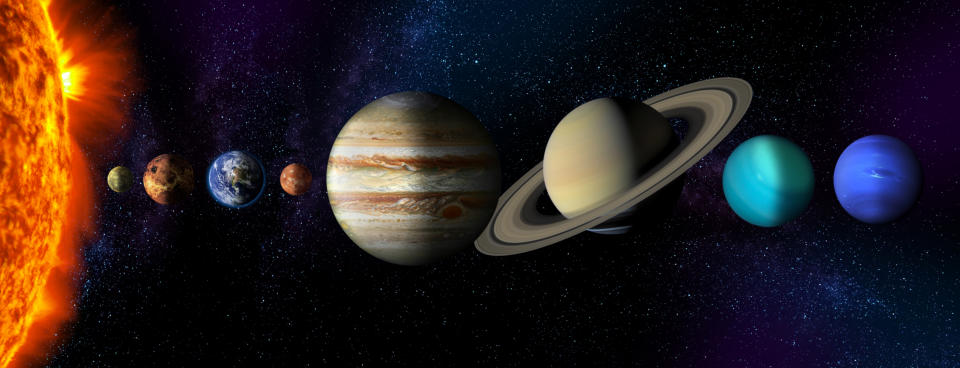
Most of the planets in our solar system are named for Roman deities (Uranus and Pluto are named for characters in Greek mythology) and the areas of human life they represent are similar to those found in Roman mythology. When a planet goes retrograde, it’s area(s) of influence are the same but it’s usually more introspective. Below are very brief overviews of each planet’s representation/influence and a description of how that changes during the retrograde period.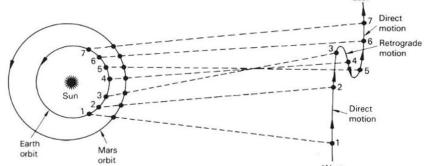
Mercury
Mercury influences communication and connections of all types, including technological
devices like computers and phones.
When Mercury is in retrograde all sorts of things break down, especially communication
between humans. It is generally considered a bad idea to enter into contracts, make major
purchases, or begin new projects during Mercury’s retrograde period.
On the up-side, Mercury retrograde is an excellent time to do research, make plans, and look inward at
obstacles to self-growth.
Mercury is retrograde three times each year for about 3 weeks.
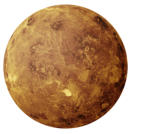
Venus
Venus rules love and passion within all partnerships. Venus is also connected to money.
When Venus is retrograde we can have unresolved relationship issues come back up. New
romantic relationships begun during this period can sour once Venus goes direct again and
investments made during Venus retrograde periods can lose value.
Introspection into our love life at this time can aid us in figuring out what we really want from a relationship.
and how we handle our emotions
Venus goes retrograde about once every 18 months or so and is in retrograde for approximately 6 weeks.
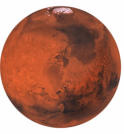
Mars
Mars influences conflict, our personal energy, and motivation.
Retrograde Mars seems to keep us from moving forward. Situations stagnate, causing
frustration and flared tempers. Projects stall and we seem unable to act on the simplest of
plans.
We can use this period to reflect on any unresolved internal conflicts and gain insight into what is keeping us
from moving forward in life. It’s also a good time to circle back and complete unfinished tasks or repair/redo
things that have been left on a back burner.
Mars goes retrograde about every 26 months for anywhere from 55 to 80 days.
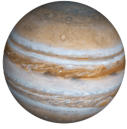
Jupiter
Jupiter is connected to wisdom, truth, and luck.
When Jupiter is retrograde, our ability to see the “big picture” is affected. Through truth
and wisdom we are offered an opportunity to see where things are going wrong in our
lives.
This is a great time to review our beliefs and desires. Introspection when Jupiter is retrograde gives us a better
connection between the body, mind, and spirit aiding in our self-improvement.
Jupiter is retrograde every year for about 4 months.
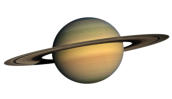
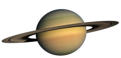
Saturn
Saturn is ruler of all aspects of civilization and politics as well as our personal
reputation and social status.
Retrograde Saturn tends to increase our maturity and causes our smaller worries and
concerns to be less important. Introspection during this time gives us a more clear understanding of how we
fit into the world and helps us focus on our duties and responsibilities. It’s a good time to work on long term
goals and finding new ways to deal with the pitfalls in life.
Saturn goes retrograde each year for 140 days or so.
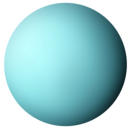
Uranus
Uranus is the bringer of chaos and impacts our internal freedom.
Where the other planet retrograde periods tend to have us acting a bit more impulsively,
Uranus retrograde actually calms us and helps us to be more objective about our lives.
But beware … while enlightenment is a good keyword for Uranus retrograde, ignoring
those things about yourself that you don’t wish to acknowledge could lead to disaster because Uranus tends to
force us to see the truth about what’s holding us back.
Uranus is retrograde around 5 months each year.
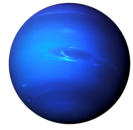
Neptune
Neptune is the ruler of dreams, the imagination, and fantasies.
When Neptune is retrograde we have a much easier time with our spirituality, but at the
same time we can be more vulnerable to deceptions and delusions. This is a great time to
focus on our inner vision and we may gain a deeper understanding of ourselves through
dreams, but we must make sure we stay grounded as it’s very easy to float away in our
fantasies.
Neptune goes retrograde for about 150 days every year.
Pluto
Pluto influences change, transformations, and psychic energies.
Pluto retrograde causes us to question who we really are, though there may be quite a bit
of confusion as we work through any introspections. This is an excellent time to do
shadow work but we need to remember to be gentle with ourselves and not work on
anything too heavy as we can easily get discouraged or depressed during this time.
Pluto is in retrograde from 5 to 6 months out of the year.
Chiron
Chiron is a dwarf planetoid discovered in 1977. It is one of several minor bodies in our solar
system referred to as centaurs … asteroid-like objects that orbit between the Kuiper and
asteroid belts. Chiron is unique in that it also behaves like a comet and is one of four minor
planets that have a ring system.
Chiron is named for the centaur in Greek mythology and is aptly named because of it’s affect on
helping us to heal ourselves and transform into our best self … the centaur Chiron taught humans medicine
and has been associated with the “wounded healer” archetype.
Chiron retrograde gives up the opportunity to work through unresolved past issues. This is an excellent time
to ask yourself the ‘why?” questions and unpack old tramas so you can deal with them.
Chiron is in retrograde for approximately 155 days each year.
I’ve added a new table to this page with the planetary motions listed for 2026. I find stuff like this to be a
handy reference at times.

2026 Planetary Motion

Motion
Start Date
Constellation

Mercury
Retrograde
February 26, 2026
Pisces
Direct
March 20, 2026
Pisces
Retrograde
June 29, 2026
Cancer

Direct
July 23, 2026
Cancer
Retrograde
October 24, 2026
Virgo
Direct
November 13, 2026
Virgo

Venus
Retrograde
October 3, 2026
Virgo
Direct
November 14, 2026
Libra

Mars
No Retrograde Period in 2026
Jupiter
Direct
March 11, 2026
Cancer
Retrograde
December 13, 2026
Leo
Saturn
Retrograde
July 26, 2026
Aries
Direct
December 10, 2026
Aries

Uranus
Direct
February 4, 2026
Taurus
Retrograde
September 10, 2026
Gemini
Neptune
Retrograde
July 7, 2026
Aries
Direct
December 12, 2026
Aries

Pluto
Retrograde
May 6, 2026
Aquarius
Direct
October 16, 2026
Aquarius
Chiron
Direct
January 2, 2026
Aries
Retrograde
August 3, 2026
Taurus







![Copyright © 2013 - 2026 Healing Through Balance, LLC. [Home] [Energetic Healing] [Energetic Healing Benefits] [Distance Sessions] [Energetic Healing for Animals] [Chakras] [Crystals] [Sound] [Aromatherapy] [Light Language] [Astrology] [About] [Philosophy] [Healing with Energy] [Energetic Bodies] [Spaces] [Reiki] [Testimonials] [Prices] [Policies] [Ethics] [Links] [Contact] [Online Shop] [FAQ]](index_html_files/47737.png)
Retrograde
Planets
What is Retrograde Motion?
In astronomy, the term retrograde is used to describe a celestial object’s orbit or spin that is the opposite of what we normally see in most of the observable universe. In most cases, the orbits of planets, moons, comets, and asteroids appear counter-clockwise when viewed from their north pole. Similarly, the spin of a planet or moon is also counter-clockwise when viewed from their north pole looking down. But occasionally either the spin or orbit of a body is reversed (clockwise) … both Venus and Uranus have retrograde spin and Triton (the large moon of Neptune) has a retrograde orbit. Some comets and small asteroids, as well as artificial satellites, will have retrograde orbits around the sun or a planet. All of these would be considered true retrograde motion. But when we talk of retrograde motion in astrology, we’re actually referring to an optical illusion that is referred to as “retrogradation” in astronomy. This phenomenon occurs when a planet appears to slow down, stop briefly, then reverse direction from an observer’s perspective on Earth. This happens when a planet with a faster orbit comes upon and passes a planet with a slower orbit. In the example shown in the diagram, you can see by the numbered locations how Mars seems to slow, stop, and then reverse direction as seen by an observer on Earth (3 & 4) and then returns to it’s normal direction of travel later in the orbit (5 & 6). Neither planet actually changes it’s orbital speed or direction, it’s really just an illusion from the observer’s perspective. It’s sort of like passing another car on the freeway. As you overtake the slower car it appears to go even slower and as you pass by it might look like it’s moving backwards.Why does retrograde motion matter?
The basic concept of astrology is that energies from the cosmos have an effect on the human body. And while the scientific community might disagree, the energies of the planetary bodies can be felt by humans, though most of us don’t notice. Regardless, our energetic field is impacted by other energies and the planets in our solar system are relatively close to us compared to the rest of the objects in the universe. As planets travel around the Sun, their proximity to Earth varies depending on where they are in their orbit, and where Earth is in it’s orbit. During most of their travel, the other planets are far enough from Earth that variations in distance from us seems to have a negligible effect. But when another planet comes closest to Earth the energies are intensified a bit, and when in retrograde since they seem to “hang around” for a while, it can be a little overwhelming. It’s sort of like being out in the afternoon sun. If you spend too much time outside on a sunny day you can get burned.Planetary Influences
Most of the planets in our solar system are named for Roman deities (Uranus and Pluto are named for characters in Greek mythology) and the areas of human life they represent are similar to those found in Roman mythology. When a planet goes retrograde, it’s area(s) of influence are the same but it’s usually more introspective. Below are very brief overviews of each planet’s representation/influence and a description of how that changes during the retrograde period.
Mercury
Mercury influences communication and
connections of all types, including
technological devices like computers
and phones.
When Mercury is in retrograde all sorts of things break
down, especially communication between humans. It is
generally considered a bad idea to enter into contracts,
make major purchases, or begin new projects during
Mercury’s retrograde period.
On the up-side, Mercury retrograde is an excellent time
to do research, make plans, and look inward at
obstacles to self-growth.
Mercury is retrograde three times each year for about 3
weeks.
Venus
Venus rules love and passion within all
partnerships. Venus is also connected
to money.
When Venus is retrograde we can have unresolved
relationship issues come back up. New romantic
relationships begun during this period can sour once
Venus goes direct again and investments made during
Venus retrograde periods can lose value.
Introspection into our love life at this time can aid us in
figuring out what we really want from a relationship.
and how we handle our emotions
Venus goes retrograde about once every 18 months or
so and is in retrograde for approximately 6 weeks.
Mars
Mars influences conflict, our personal
energy, and motivation.
Retrograde Mars seems to keep us from
moving forward. Situations stagnate, causing
frustration and flared tempers. Projects stall and we
seem unable to act on the simplest of plans.
We can use this period to reflect on any unresolved
internal conflicts and gain insight into what is keeping
us from moving forward in life. It’s also a good time to
circle back and complete unfinished tasks or repair/redo
things that have been left on a back burner.
Mars goes retrograde about every 26 months for
anywhere from 55 to 80 days.
Jupiter
Jupiter is connected to wisdom, truth,
and luck.
When Jupiter is retrograde, our ability
to see the “big picture” is affected. Through truth and
wisdom we are offered an opportunity to see where
things are going wrong in our lives.
This is a great time to review our beliefs and desires.
Introspection when Jupiter is retrograde gives us a
better connection between the body, mind, and spirit
aiding in our self-improvement.
Jupiter is retrograde every year for about 4 months.
Saturn
Saturn is ruler of all aspects of
civilization and politics as well as
our personal reputation and social
status.
Retrograde Saturn tends to increase our maturity and
causes our smaller worries and concerns to be less
important. Introspection during this time gives us a
more clear understanding of how we fit into the world
and helps us focus on our duties and responsibilities.
It’s a good time to work on long term goals and finding
new ways to deal with the pitfalls in life.
Saturn goes retrograde each year for 140 days or so.
Uranus
Uranus is the bringer of chaos and
impacts our internal freedom.
Where the other planet retrograde
periods tend to have us acting a bit more impulsively,
Uranus retrograde actually calms us and helps us to be
more objective about our lives.
But beware … while enlightenment is a good keyword
for Uranus retrograde, ignoring those things about
yourself that you don’t wish to acknowledge could lead
to disaster because Uranus tends to force us to see the
truth about what’s holding us back.
Uranus is retrograde around 5 months each year.
Neptune
Neptune is the ruler of dreams, the
imagination, and fantasies.
When Neptune is retrograde we have a
much easier time with our spirituality, but at the same
time we can be more vulnerable to deceptions and
delusions. This is a great time to focus on our inner
vision and we may gain a deeper understanding of
ourselves through dreams, but we must make sure we
stay grounded as it’s very easy to float away in our
fantasies.
Neptune goes retrograde for about 150 days every year.
Pluto
Pluto influences change,
transformations, and psychic energies.
Pluto retrograde causes us to question
who we really are, though there may be quite a bit of
confusion as we work through any introspections. This
is an excellent time to do shadow work but we need to
remember to be gentle with ourselves and not work on
anything too heavy as we can easily get discouraged or
depressed during this time.
Pluto is in retrograde from 5 to 6 months out of the
year.
Chiron
Chiron is a dwarf planetoid discovered
in 1977. It is one of several minor
bodies in our solar system referred to as
centaurs … asteroid-like objects that
orbit between the Kuiper and asteroid belts. Chiron is
unique in that it also behaves like a comet and is one of
four minor planets that have a ring system.
Chiron is named for the centaur in Greek mythology
and is aptly named because of it’s affect on helping us
to heal ourselves and transform into our best self … the
centaur Chiron taught humans medicine and has been
associated with the “wounded healer” archetype.
Chiron retrograde gives up the opportunity to work
through unresolved past issues. This is an excellent
time to ask yourself the ‘why?” questions and unpack
old tramas so you can deal with them.
Chiron is in retrograde for approximately 155 days
each year.
I’ve added a new table to this page with the planetary
motions listed for 2026. I find stuff like this to be a
handy reference at times.







2026 Planetary Motion

Motion
Start Date
Constellation

Mercury
Retrograde
February 26, 2026
Pisces

Direct
March 20, 2026
Pisces
Retrograde
June 29, 2026
Cancer
Direct
July 23, 2026
Cancer
Retrograde
October 24, 2026
Virgo
Direct
November 13, 2026
Virgo

Venus
Retrograde
October 3, 2026
Virgo
Direct
November 14, 2026
Libra

Mars
No Retrograde Period in 2026

Jupiter
Direct
March 11, 2026
Cancer
Retrograde
December 13, 2026
Leo
Saturn
Retrograde
July 26, 2026
Aries
Direct
December 10, 2026
Aries
Uranus
Direct
February 4, 2026
Taurus
Retrograde
September 10, 2026
Gemini
Neptune
Retrograde
July 7, 2026
Aries
Direct
December 12, 2026
Aries
Pluto
Retrograde
May 6, 2026
Aquarius
Direct
October 16, 2026
Aquarius
Chiron
Direct
January 2, 2026
Aries
Retrograde
August 3, 2026
Taurus


